
Neurofeedback Therapy at Kincove for Focus and Calm
Brain-based training for focus, regulation, stress, sleep, and cognitive performance.
Sometimes it can be hard to focus, settle your mind or body, manage reactions, or feel regulated throughout the day, even when you understand what you’re struggling with.
Neurofeedback offers another way to work with these patterns by using real-time information about brain activity to help train the brain toward more regulated patterns.
At Kincove, neurofeedback is individualized around your brain activity, what you’re experiencing, and how you respond over time.
What is Neurofeedback?
Neurofeedback is a noninvasive form of brain training that uses real-time information about brain activity.
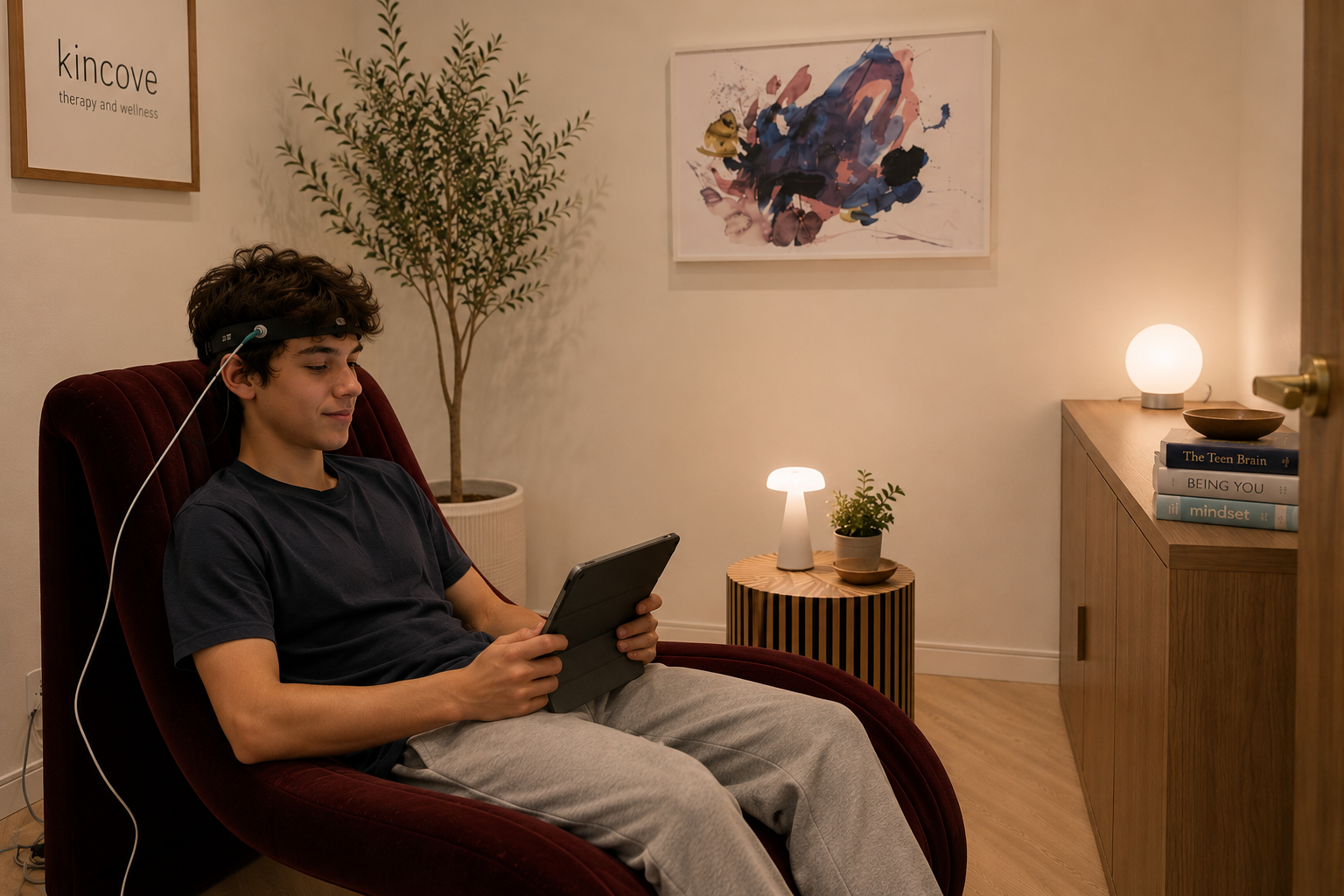
Sensors read brainwave activity while you watch or listen to something on a screen. The feedback changes along with your brain activity, giving the brain repeated opportunities to practice more regulated patterns.
The sensors only read brain activity. Nothing is being electrically stimulated or sent into the brain.
Neurofeedback Process
Step 1: qEEG Brain Assessment
-
The qEEG Brain Assessment gives us a detailed picture of how your brain is functioning.
By measuring brainwave activity, we can identify patterns that may be contributing to challenges with attention, anxiety, mood, sleep, emotional regulation, and more. This information helps us create a neurofeedback plan tailored to your unique needs.
-
During the assessment, electrodes are placed on the scalp to record brainwave activity. The client is asked to relax and perform specific tasks, giving a detailed snapshot of their brain’s functioning.
-
The qEEG process is painless, non-invasive, and typically takes about 30-45 minutes. It’s designed to make clients feel comfortable and relaxed throughout.
-
By capturing a detailed profile of brainwave activity, qEEG helps create a customized neurofeedback plan. This data-driven approach enhances the effectiveness of neurofeedback by addressing each individual’s unique brain patterns.
Step 2: Myndlift Neurofeedback
-
Neurofeedback helps train the brain to function more efficiently.
By encouraging healthier brainwave activity over time, neurofeedback supports improved attention, emotional regulation, stress management, sleep, and overall cognitive functioning.
-
During each session, electrodes are placed on the scalp to monitor your brainwave activity while you watch a movie, play a game, or complete another activity.
The neurofeedback system provides real-time feedback, helping your brain recognize and strengthen healthier patterns of activity.
-
Sessions are comfortable, non-invasive, and typically last about 30 minutes. Neurofeedback doesn't involve medication or electrical stimulation.
As your brain receives feedback over multiple sessions, it gradually learns to maintain healthier patterns on its own.
-
Many individuals notice improvements in focus, emotional regulation, resilience to stress, sleep, and overall daily functioning.
Because neurofeedback supports the brain's natural ability to learn and adapt, these improvements often continue beyond individual sessions.

What Neurofeedback Targets
Neurofeedback can be incorporated into care when we want to work more directly with attention, regulation, stress, sleep, and other brain-based patterns.
We commonly use neurofeedback to support:
Attention, focus, and executive functioning
ADHD-related challenges
Anxiety, stress, and feeling easily overwhelmed
Emotional regulation and reactivity
Sleep and difficulty settling
Mental fatigue and cognitive performance
Neurofeedback can be used on its own or alongside therapy, medication, and other care.
The Science Behind Myndlift
Backed by proven research, Myndlift has been shown to improve mental wellness through neuroplasticity and brainwave training. For more detailed scientific research supporting Myndlift’s neurofeedback technology, click here.
Frequently Asked Questions
-
Neurofeedback is a non-invasive form of brain training that helps your brain learn to regulate itself more effectively.
By monitoring brainwave activity and providing real-time feedback, it encourages healthier patterns that can improve focus, emotional regulation, sleep, stress management, and overall brain function.
-
Your program begins with a qEEG Brain Assessment, which helps us understand how your brain is functioning and creates the foundation for your personalized training plan.
From there, you'll participate in regular neurofeedback sessions while your clinician monitors your progress and adjusts your training as needed.
-
Sessions typically last 20-30 minutes. For the best results, we generally recommend 2-3 sessions per week, though your schedule will be personalized based on your goals.
Most clients complete 30-40 sessions, depending on their needs and progress.
-
Yes. Neurofeedback is a safe, evidence-based treatment that has been used for decades. It simply monitors your brain's natural activity and does not involve medication or electrical stimulation.
-
Many clients notice improvements in focus, emotional regulation, stress management, sleep, and overall daily functioning.
While some people experience changes early on, lasting improvements develop over time through consistent training.
-
At Kincove, neurofeedback is integrated into a broader treatment approach rather than used on its own.
We use qEEG brain mapping to personalize every training plan and adjust it as your needs evolve, helping ensure your care continues to support your long-term goals.