
Neurofeedback for Tweens & Teens
Brain-based support for Los Angeles adolescents navigating attention, anxiety, emotional regulation, sleep, stress, and executive functioning challenges.
Neurofeedback is a noninvasive form of brain training that uses real-time information about brain activity to help the brain practice more regulated patterns.
At Kincove, we begin with a qEEG brain map to better understand your child's brain activity and how it may relate to what they're experiencing day to day. From there, we create an individualized training plan and track progress through ongoing sessions, updated brain maps, and regular parent reviews.
Neurofeedback can be used on its own or alongside individual therapy and other forms of support.
How Neurofeedback Works
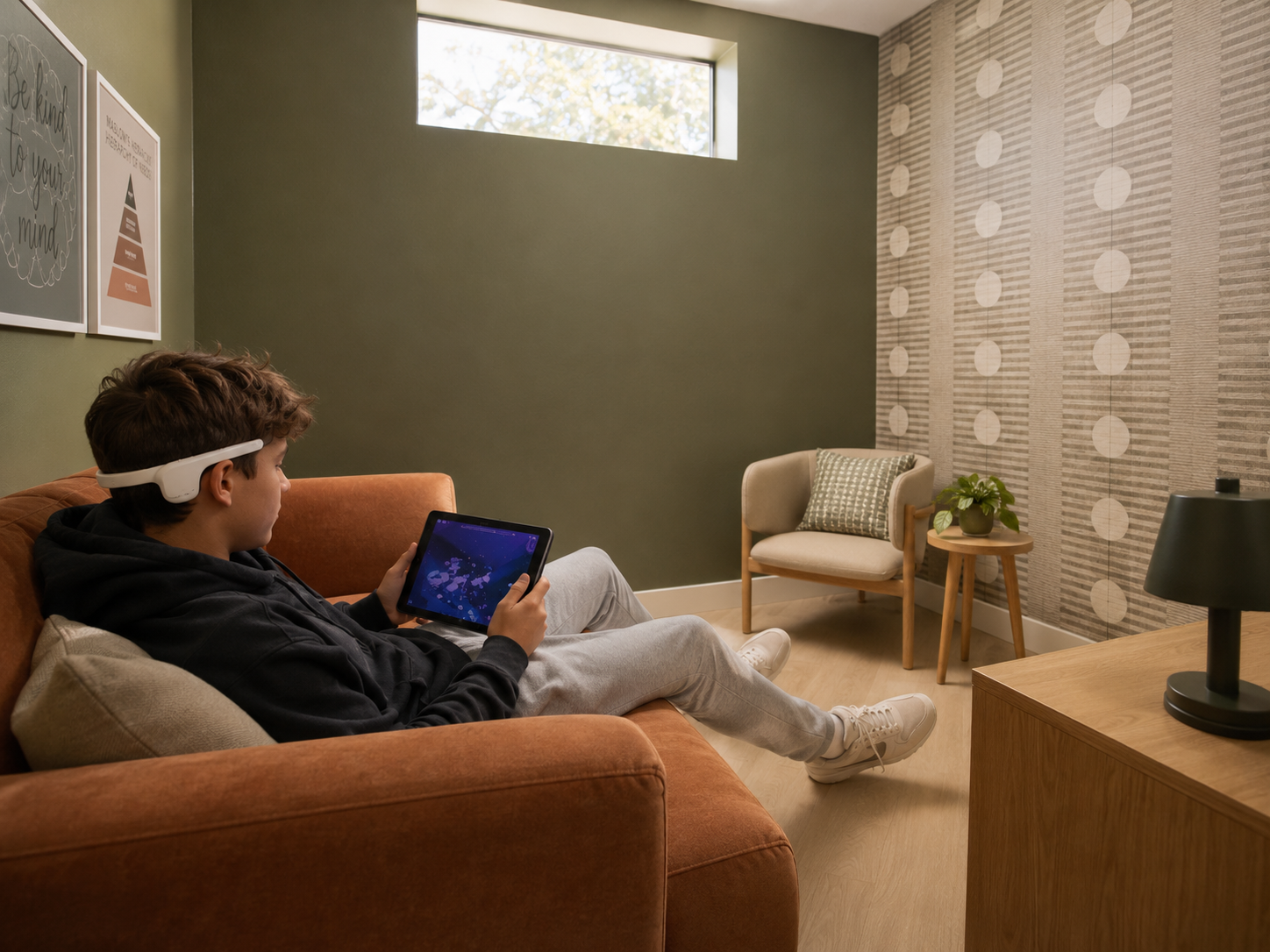
Neurofeedback uses sensors placed on the scalp to measure brainwave activity while the brain receives feedback in real time. During training, your child may watch a movie, play a game, or complete another activity while the system responds to changes in their brain activity.
There is no electrical stimulation going into the brain. The sensors only measure activity, making sessions noninvasive and easy to participate in.
Neurofeedback Process
Step 1: qEEG Brain Assessment
-
The qEEG brain assessment gives us a detailed picture of your child's brain activity before training begins.
We look for patterns that may be relevant to concerns with attention, anxiety, emotional regulation, sleep, executive functioning, and stress. We consider this information alongside your child's history, current concerns, and what you're noticing in everyday life.
-
Small sensors are placed on the scalp to record brainwave activity while your child completes different parts of the assessment.
The sensors only measure brain activity. Nothing is sent into the brain. The recording provides objective information that helps us understand your child's patterns and guide training.
-
The assessment is painless, noninvasive, and typically takes 30–45 minutes. We explain the process beforehand so your child knows what to expect and has time to get comfortable.
Once the recording is complete, the data is analyzed to create a visual brain map showing patterns of activity across different areas of the brain.
-
We review the results with parents and explain what we're seeing in clear, understandable terms.
The brain map is considered alongside your child's symptoms, experiences, and goals to develop an individualized neurofeedback plan and determine which patterns to focus on during training.
Step 2: Myndlift Neurofeedback Training
-
Neurofeedback gives the brain repeated opportunities to practice more regulated patterns through real-time feedback.
Training is guided by your child's qEEG brain map, current concerns, and treatment goals rather than using the same protocol for every client.
-
During sessions, sensors monitor brain activity while your child watches a movie, plays a game, or completes another activity.
The Myndlift system responds to their brain activity in real time. This feedback allows the brain to recognize and repeatedly practice the patterns being targeted throughout the session.
-
Sessions are comfortable, noninvasive, and typically last 20–30 minutes. Neurofeedback does not involve medication or electrical stimulation.
We generally recommend training 2–3 times per week, although frequency may vary depending on your child's needs and progress.
-
We monitor progress throughout training rather than following the same plan from beginning to end.
Updated brain maps are typically completed about every six weeks so we can compare brain activity over time and adjust training when appropriate.
We also look at what you and your child are noticing outside of sessions, including changes in focus, emotional regulation, stress, sleep, and other treatment goals. Parents receive ongoing updates and opportunities to review results, ask questions, and understand how their child is responding.
Keeping Parents Informed
Parents know their child outside of our office, which makes what you're noticing an important part of understanding progress.
We keep parents involved throughout neurofeedback by reviewing brain maps, discussing changes you're seeing at home or school, and explaining how training is progressing and any adjustments we're making along the way.
The brain data gives us one perspective. How your child is feeling and functioning in everyday life gives us another. We consider both when evaluating progress.
The Science Behind Myndlift
Neurofeedback has been studied across areas including attention, self-regulation, and other cognitive and emotional concerns. Kincove uses Myndlift technology to provide and monitor individualized neurofeedback training.
You can explore research and clinical studies related to Myndlift's neurofeedback technology here.
Frequently Asked Questions
-
Neurofeedback may be helpful for adolescents struggling with attention, executive functioning, anxiety, emotional regulation, stress, or sleep.
During your consultation and initial assessment, we'll learn more about what your child is experiencing and determine whether neurofeedback makes sense as part of their care.
-
Neurofeedback is noninvasive and does not send electrical stimulation into the brain. Sensors placed on the scalp simply measure brain activity so the system can provide feedback during training.
-
Sessions are designed to be comfortable and easy to participate in. Your child may watch a movie, play a game, or complete another activity while sensors monitor their brain activity and the system provides feedback in real time.
-
Sessions typically last 20–30 minutes, and we generally recommend training 2–3 times per week. Frequency and overall length of training are based on your child's individual needs and progress.
-
We look at both brain activity and changes in everyday life. Updated brain maps are typically completed about every six weeks and reviewed alongside what you and your child are noticing with attention, emotions, stress, sleep, and other treatment goals.
Parents are kept informed throughout the process and have opportunities to review results, ask questions, and discuss progress.
-
Yes. Neurofeedback can be used on its own or alongside individual or family therapy. When services are combined at Kincove, we can coordinate care so neurofeedback and therapy support the same overall treatment goals.